
Tuesday, 19 January 2016

Elizabeth David's Pot Roast Chicken with Olive Stuffing

I have only recently discovered the delights of Elizabeth David's recipe books, in particular French Provincial Cooking. This book has been in my possession for a few years, and whilst I’m very fond of dipping in and out of it, I was slightly daunted by the sparse cooking instructions and lack of photographs and put it to the back of my mind (and my book shelf). 

As my confidence has grown in the kitchen, I’ve found myself being drawn back to it. After reading David’s An Omelette and a Glass of Wine, a collection of the essays she wrote for publications such as The Spectator and Vogue, I was inspired to her cooking philosophy. She places emphasis on simple but brilliant food, and allowing the natural flavours of the ingredients to shine through. Make no mistake - these are not fifteen minute meals. Love and time are required for these recipes to work. Writing to an audience who were still hungover from war time rationing, the ingredients she demanded were luxurious and not available just anywhere. Indeed, when I set out on sourcing various things to make some of the meals, I had to be organised. Tesco Express, with all it’s convenience would be unable to satiate Ms David’s culinary needs.

This first recipe is a nice first foray into Elizabeth's work. The sophisticated olive stuffing makes the humble chicken truly tasty, and it is one of her simpler recipes - perfect for weekend experimentation. 


Pot Roast Chicken with Black Olive Stuffing


David describes the olive stuffing stuffing as “so good [but] definitely rather odd”. Obviously olives are commonplace in Britain now so even those with “conventional tastes” should enjoy it.

I’d never thought of pot-roasting a chicken before trying out this recipe, but now I prefer it to the oven roasting method. As long as you have the right dish it is a very simple method. The pot needs to be thick and heavy so that the skin doesn’t stick to the bottom and to ensure that an even temperature is maintained throughout. I use my trusty Le Creuset cast iron casserole dish which naturally, is what David recommends for this dish from French Provincial Cooking.

The chicken only needs to be turned a couple of times whilst it is cooking, so this is a low maintenance dish that allows you to get on with urgent weekend activities (for me, this usually consists of deriding Tim Dowling’s column in the Saturday Guardian). One thing to be careful of is damaging the skin of the chicken when turning it - the first time I made this dish I managed to render the chicken almost naked. It was still very tasty, but after being more diligent on the next go I was rewarded with a gorgeously golden-skinned bird which was far superior to the previous one. 


Ingredients 

1 medium chicken, 1- 1.5kg
4 tablespoons cooking oil

For the stuffing

20 black olives, stopped and chopped
60g fresh white breadcrumbs
1/4 onion, copped
1 garlic clove, chopped 
A few parsley sprigs, chopped 
Black pepper
Nutmeg


To make the stuffing combine the breadcrumbs and the chopped ingredients and bind with the beaten egg. Season with a few grinds of black pepper and a few grates of nutmeg. Don’t add any salt. Stuff the cavity of the bird and set aside.


Heat the oil in the pot over a gentle temperature. Place the chicken on its side and leave for 5 minutes and then do the same with the other side. Place the lid on the chicken and leave to cook over the gentle heat for around 1 hour and 30 minutes, or until the juices run clear. The chicken will need to be turned other a further two times whilst cooking.


When cooked, remove the chicken from the pot, being extra careful not to damage the skin. Transfer to a carving board and cover with tin foil, leaving the bird to rest for at least 15 minutes.  

I like to serve my chicken with some shallow fried aubergines and courgettes,as they complement the olive stuffing. Roast potatoes are as always, a welcome addition to any roast. The leftover over juices in the cooking pot make a wonderful gravy.

Thursday, 14 January 2016

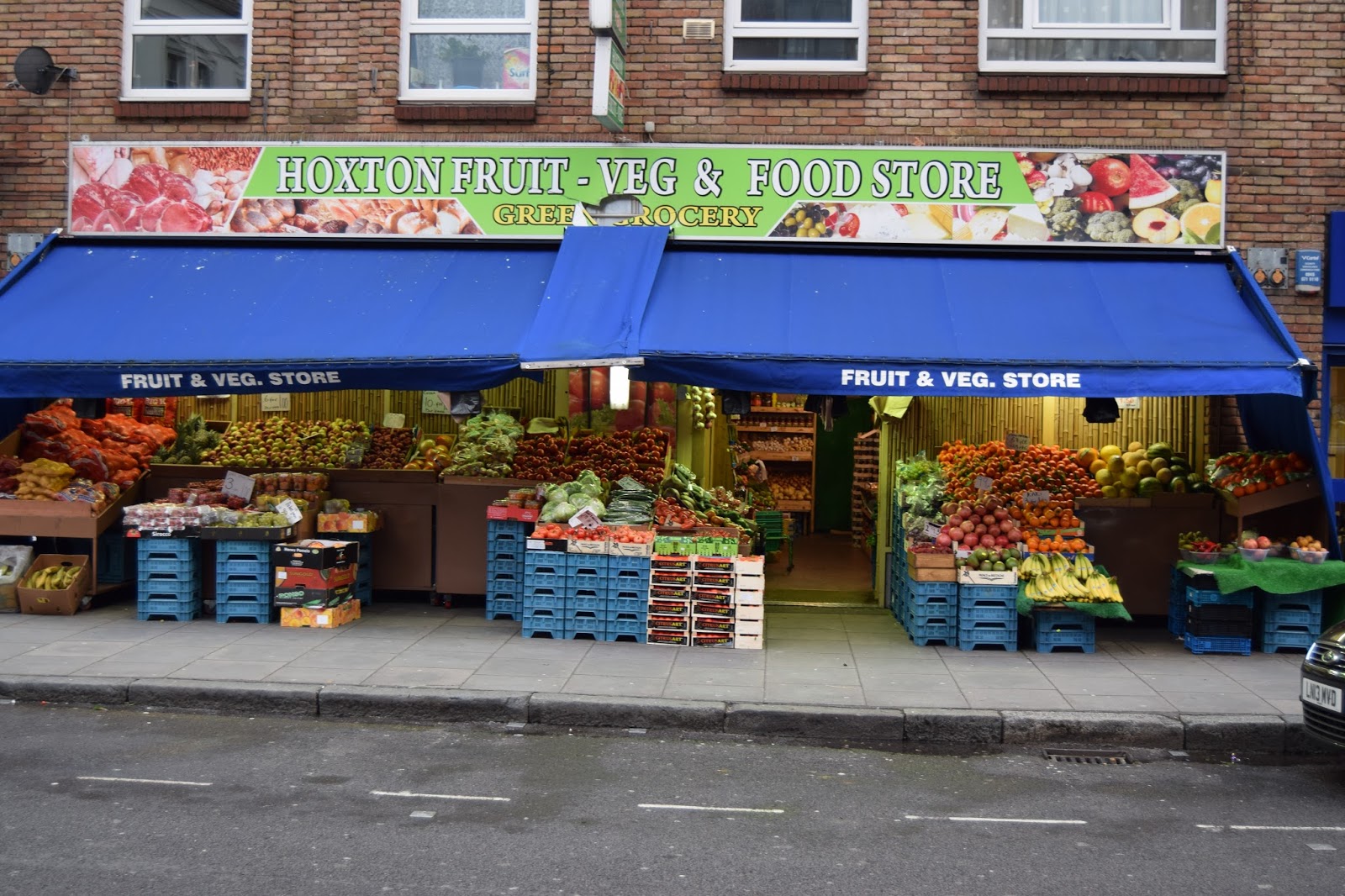
Hoxton Fruit and Veg Review


Hoxton Fruit and Veg is my local greengrocers and where I buy most of my fresh produce during the week. Many of the restaurants in the local area use the shop and as a result, the choice of products is great. The herb section is wonderful, with huge bunches of coriander and parsley for around 50p - a welcome change from the few miserly sprigs that supermarkets charge a premium for.


There are also great bulk bargains to be had, my personal favourite being a 5kg sack of onions for under £1.50 which lasts me around a month. The fact you can also pick up 10 apples or oranges for £1 is a great incentive to make the most out of your juicer. 

They also stock every pulse and grain you could ever need as well as a wide variety of dried herbs and spices. They have also recently added barrels of fresh olives to the shop, as well as a selection of dried fruits. The Turkish bread is particularly good and a steal at 50p for a huge loaf. When I want to create the Mangal experience at home it’s my must have! 

Seasonal produce is readily available here and it is often the first place to cater certain things. It was the only place I could source damsons at the beginning of autumn. Although they were ruinously expensive (around £4 more per kilo than Chapel Market at Angel) it enabled me to get my Damson Gin in production in time for Christmas. 


In the summer the shop front is packed full of gorgeous watermelons the size of boulders. It is depressing when these start to dwindle, marking the end of summer, but one is consoled by the delivery of pumpkins which arrives soon after. 


Some of the fruit on sale is so exotic that I had never heard of them before, let alone seen them available to buy. Fortunately they supply little fact sheets telling of the country of origin and how to prepare and eat them. Thanks to this I’ve discovered tamarillos, rambutan and the joys of fresh turmeric. If you’re looking to pimp up your fruit bowl this is definitely the place to do it. 

Behind the till there is every colour imaginable of ‘Just For Men’ hair dye - I have yet to witness anyone actually buy it but if you’re into that sort of thing, you’ll be spoilt for choice. 

My one gripe is the potatoes. I find them quite pricey, especially when they never seem to be at their best. As I can get them cheaper and better elsewhere I tend to avoid them unless I have a potato shortage (being Irish this happens more than it should). Hoxton Fruit and Veg is such a treasure trove of a shop that I forgive them for this and will continue being a happy shopper there for as long as I’m resident in Hoxton. 


I received no payment for this review. Hoxton Fruit and Veg DID supply me with endless cardboard boxes for house moving in the summer, but this does not count as bribery. Thought I’d put that out there. 


Tuesday, 12 January 2016

Burns Night Recipes: Cranachan

Burns Night is perfectly placed to perk up what can be a dull month. It is a night for rich food, great poetry and best of all, a nice wee dram of whiskey. For dessert it is hard to beat Cranachan, Scotland’s answer to Eton Mess and the perfect dish to round off the night. The ingredients showcase the very best of Scottish produce and the quick assembly time is a godsend, particularly when Burns Night falls on a Monday this year. Virtually any fruit can be used for the compote, but as rhubarb is in season in January, I prefer to use this as the base. 


Oats, a staple of the Scottish diet are an important component  in this dessert. Pinhead oats are best to use here as their coarse texture gives the dish more bite. Gently toasting the oats until they are golden in colour greatly improves their flavour and adds a nutty note. 

To be truly traditional, you’ll want to use heather honey. It is a widely available product, but if you don’t have it to hand, any honey will make a fine substitute. The whisky should of course be Scotch, and if you have bought a bottle for the evening it is not too much of a hardship to devote of couple of drams to the dessert. 


Ingredients - Serves 4

300 ml Double Cream
2 medium rhubarb sticks
100g strawberries
1 tbsp sugar
2 tbsp heather honey
2/3 tbsp whisky, preferably Scotch
50g pinhead oats

First, make the compote by chopping the rhubarb into inch sized chunks and the strawberries in half. Place these in a saucepan with the tablespoon of sugar and a scant amount of water. Simmer until the fruit has softened completely. Allow to cool, then refrigerate until assembling the dessert.

Place the oats on a baking tray and place into a medium oven for a few minutes until golden. Keep a close eye on the oats, as they can go from attractively golden to burnt in a matter of seconds. Allow to cool completely.

Just before serving whisk the double cream into stiff peaks with an electric hand mixer. Add the whisky and honey and combine the mixture with a spatula. Stir through the compote and three quarters of the toasted oats. Divide the cream into four dessert dishes and sprinkle the remaining oats on top. Serve immediately.


Is Cranachan a superior dish to Eton Mess? What is your favourite dessert to have on Burns Night? What will you be using to stave off the whisky hangover the next day? 

Tuesday, 5 January 2016

January

January is often referred to as the most depressing month of the year. It’s not hard to see why. Christmas creeps up on us earlier each year, with shops determined to fill us up on mince pies and Baileys before the Guy Fawkes’ fireworks have fallen from the skies. After months of build up, culminating in a hedonistic couple of weeks of seasonal celebrations, going cold turkey (groan) in January can be a shock to the system. 

Whilst our bodies are recovering from the influx of rich foods, our wallets also need a rest from the pounding (Groan Part II) they took paying out for endless gifts. Having a restful month means that more time can be spent in the kitchen elevating simple ingredients to something special. Warm salads are my top January pick. It’s a way of satisfying oneself with warming food without resorting to stodge.

Warm salads are a saviour in a cold, austere month. Roasting vegetables like cauliflower and broccoli brings out their sweetness and nuttiness, providing an excellent base for a tasty meal. Add some pulses such as chickpeas or fava beans as an alternative to meat. 

Warm Tuna Niçoise Salad


"Veganuary" is the latest New Year's food fad but I would never advise going completely meat-free for a whole month. The onus is on cuts of meat that a relatively cheap to buy and that benefit from long, slow cooking. The butcher’s counter at Waitrose is great for this. They stock a selection of “forgotten cuts” that include things like oxtail, lamb breast, pigs cheek and beef skin.  There is no better way to work up an appetite than the aroma of a delicious dinner wafting through the house for hours on end.

Pork Shoulder Goulash
                                                                 

Dry January is also sensible. It saves money but also gives the liver some respite, having been over-worked with bucks fizz and mulled wine. I find abstaining from alcohol an absolute bore and the mere thought of a ‘dry’ weekend an awful one, so the quest is to find a non-alcoholic drink that doesn't feel like a deprivation. Orange blossom can elevate a lime cordial to something classy and moreish. Pubs - take note: exciting, virgin drinks are more in demand than ever before but orange juice and coke don’t cut it anymore. 

There are also plenty of ingredients lurking in one’s cupboard that can be used for some restorative beauty sessions. When chucked into a hot bath, an old stocking filled with oats will soften and brighten skin that has been treated harshly by the cold winter weather. Any cooking oil mixed with salt and a few drops of lemon juice will slough away dead skin cells and improve circulation. Epsom salts (or Magnesium Sulfate) are my favourite bath time treat. I buy 25kg sacks off Amazon and add two large mugfuls to my bath once a week. It is the easiest way to get more magnesium into our diet, because it is absorbed throw the skin. Toxins are also removed during reverse osmosis and the goodness of the salts are drawn in. 

Burns’ Night is surely a highlight of January. My Burns’ Night menu hasn't changed in the few years I’ve been doing it and true to form my starter and dessert will be the same as usual. A cullen skink made from arbroath smokies and a cranachan, Scotland’s (superior) answer to the Eton Mess.The one change this year is that I’ll be attempting to make my own Haggis. Give your butcher plenty of notice to ensure that you have all the components to make the haggis because a sheep's stomach is a difficult item to procure, even in Waitrose. 

So it's not all doom and gloom! There's plenty of opportunity to make your January as delicious as your Christmas, albeit in slightly different ways.

Happy New Year!


Wednesday, 30 September 2015

October


October kicks off with World Vegetarian Day which is held on the first of the month - a perfect excuse to get stuck into the squash that is in abundance this season. Carving pumpkins is a fun Halloween tradition but remember that the innards are a tasty treat. My favourite way to use them is roasted and puréed for a ravioli filling and when rubbed with garlic oil and roasted, pumpkin is a delicious addition to a Sunday roast. 


Of course, prolonged vegetarianism would be foolish seeing as October is when game starts trickling into shops. This year I got my hands on a glut of damsons and have made a jar of sauce that complements the meat beautifully. Loath as I am to utter the dreaded C word prematurely, it really is necessary to think ahead if you want to make your Christmas as tasty as possible. Damson sauce is a great alternative to cranberry sauce, if you fancy a more original addition to your seasonal table.


This month is also the height of the British apple season. It's almost a shame to cook them as they are delicious au natural but a bit of pastry never does any harm so I'm using this month to perfect my Tarte Tatin making skills. Waitrose stock "Weather blemished" apples which are great value, prevent food waste and give our orchard farmers a helping hand when the weather works against them. They are perfectly imperfect and I love them so much that I seek them out over their more aesthetically pleasing counterparts. It's the shopping equivalent of welcoming an abandoned kitten into your home, albeit less messy and a lot tastier.


Wednesday, 6 May 2015

Election Night 2015

To celebrate the General Election, I'm making burgers which will be themed around the main party colours.

So far I've got: 

Red meat and tomato relish (Labour)

Blue Cheese (Conservatives)

Cos Lettuce (Greens, obviously)

English Mustard (Lib Dems/SNP)

Burger Buns (slightly yellow in colour and possibly represent the Lib Dems desperately trying to hold everything together).


AND

A sorry little bit of beetroot which was added as an afterthought and doesn't really fit in with the rest of the meal ( UKIP...quite appropriate really).


For drinks, I fancy making this red wine, curaçao and orange juice concoction which looks a bit like a Labour/SNP coalition with a sprinkling of Green.

Whatever the result, it's highly unlikely that champagne will be in order...


Wiener Schnitzel


On the surface, Wiener schnitzel seems like a simple dish but there are various rules to follow which ensure that it tastes as good as possible. From the breadcrumbs used to the method of frying, here are my tips on making it perfect.

The meat: Veal escalopes are the way to go and they should be cut as thinly as possible and across the grain. It is also a good idea to bat them out at home with a meat tenderiser before coating them in breadcrumbs.

Breadcrumbs: Fresh breadcrumbs don't quite work here - they are too soft and don't develop the satisfying crunch that you get with dried ones. The breadcrumbs should also be fine in texture. I often give mine a quick blitz in a food processor to achieve this.

Egg wash:  A splash of double cream in the beaten egg adds a luxurious richness and compliments the milky taste of the veal.

Cooking: I've found a mixture of clarified butter and sunflower oil to be the best fats to cook the schnitzel. As the impurities have been removed from the butter, it can be heated to a much higher temperature without burning, meaning that the breadcrumbs have time to go crisp without acquiring those unattractive black flecks that often come hand in hand with cooking in butter. 

A generous amount of fat is needed to cook the veal (around 0.5 cm) and if you need to keep it to one side whilst batch cooking, place it on a cooking rack under a low grill. This allows any excess fat to drip out, hence preventing the crust from becoming soggy.


Ingredients (Serves 2)

400g veal escalope, sliced thin and tenderised
80g fine, dried breadcrumbs
1 egg, beaten 
1 tsp double cream
Flour, to dust 
80ml sunflower oil 


Method

Everything has to happen very quickly here, so set up your workstation. Place the flour in one dish, the egg and cream in another and finally the breadcrumbs in a large shallow dish, big enough to accommodate the veal.


Place the clarified butter and oil in a frying pan and heat to a high temperature. Test this by sprinkling in a few breadcrumbs - they should turn golden straight away. If batch cooking, switch the grill on to the lowest temperature.

Dust the veal in the flour and shake off any excess. Dip in the egg wash, letting any extra egg drip off before placing in the breadcrumbs, making sure the meat is evenly coated.

Place the veal in the frying pan and allow to cook for a couple of minutes. Whilst this is happening, use a table spoon and pour some of the fat over the veal, coating it entirely. This seals the breadcrumbs on top and lessens the risk of them separating from the meat. 

Carefully flip the veal and cooking for a further 3 minutes. When flipping, tilt the pan so that the butter and oil run to one end, then the schnitzel won't land in half centimetre of hot fat. The schnitzel should be golden brown all over. Remove from the frying pan and place under the grill until ready to serve.

Mix any remaining breadcrumbs into the egg wash and fry as a fritter. If you have children, it can be fun to give out the 'fake schnitzel' as a reward. Leo has painful memories of fighting for it with his brothers. 

We like to eat schnitzel with champ, sauerkraut and pickled red cabbage. Truffle mustard is more than a truffle expensive but completely divine, made and sold by Fitz Fine Foods at Borough Market. Beer makes a good accompaniment. Leo likes a traditional German Pilsner or a nice cool IPA, whilst I like a crafted fruity beer. Put Schubert on Spotify, preferably the Winterreise.