
Showing posts with label Pasta. Show all posts

Monday, 24 November 2014

Lasagne


Lasagne is the perfect comfort food. Ragu, pasta and a béchamel sauce all layered together to create something totally delicious. The secret ingredient in this dish is chicken liver. Even if you think you don't like offal, give them a go anyway. Chopped finely enough they melt into the ragu to produce an undetectable but delectable taste. 


I use dried pasta sheets in this, which seems lazy, but having experimented with homemade fresh pasta  I've found that it is too soft in the finished dish - using dried ensures that the layers stay intact once cooked. Be sure to use egg pasta sheets though as they have a richer flavour than their flour and water counterparts.


Ingredients 

For the ragu

500g lean beef mice
100g chicken livers, finely chopped
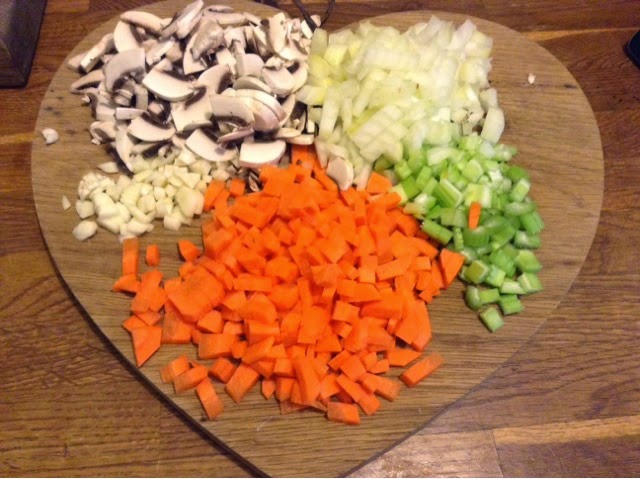
2 carrots, chopped
1 onion, chopped
1 celery stick, finely chopped
100g mushrooms, quartered 
400ml passata 
100ml red wine 
1 tbsp tomato purée 
3 garlic cloves, chopped
2 tbsp oil, to cook
Salt and pepper, to taste


For the béchamel sauce

150g butter
150g flour
600ml whole milk ( you may not need it all)
80g Parmesan cheese, plus extra or top

9 dried lasagne sheets


Method 

Make the ragu first, as this takes the longest to do. Heat the oil in a large casserole dish and add the onion, cooking gently until it is softened (around 10 minutes). Then, add the garlic and cook for a further 2 minutes. 

Next, add the rest of vegetables (and a bit more oil, if needed) and cook for 5 minutes before adding the mince and chicken livers and frying until evenly browned.

Add the passata, red wine and tomato purée and mix everything together before bringing to the boil and then placing it on the lowest heat setting, leaving it to simmer for around 2 hours. Allow to cool before assembling your lasagne.


For the bèchamel sauce

Melt the butter in a sauce pan and then whisk in the flour until there are no lumps. Leave this on the hob for a few minutes to cook the floury taste out of it. Then, whisk in the milk a little at a time until you have a thick, smooth sauce. Stir in the Parmesan cheese and leave to cool.


Pasta sheets

Bring a large pan of salted water to the boil and blanch the sheets in batches of three for around 30 seconds to slightly soften, before placing them on a clean tea towel or kitchen paper.


Assembling the lasagne

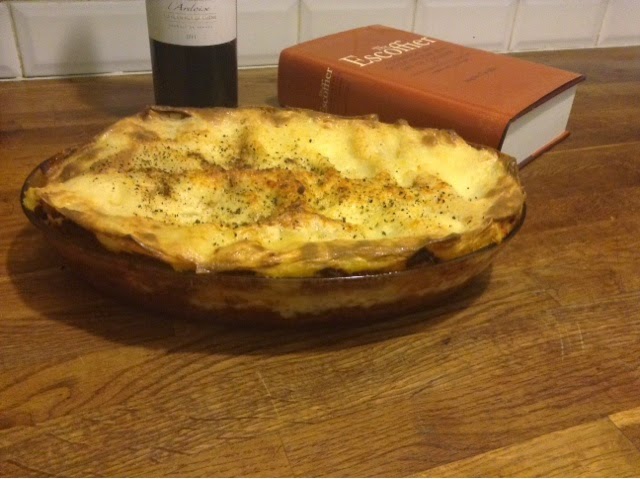
I actually broke my lasagne dish a while ago and haven't got round to replacing it, so just used a pie dish which is a couple of inches deep. The good thing is that it's made of glass, so the layers are visible from the outside.


Grease your dish and start your layers. I do ragu, béchamel and pasta three times before covering the last layer of pasta with the remaining white sauce and scattering over some Parmesan and a few grinds of black pepper. The construction of lasagne is a contentious issue, so build it however you like, but I really do think this way is the tastiest.

Cook at 200 degrees for 30-40 minutes until the lasagne is bubbling and the top is golden and crispy. Leave to stand for 10 minutes and serve with a green salad and some olives. Like most food, lasagne is even better the next day and freezes well before cooking.


Tuesday, 29 July 2014

Beef Carpaccio, lemon pesto and fresh pasta


I adore carpaccio. There is something wonderfully primitive about it, but it still manages to be elegant at the same time. To turn it into a more substantial but still summery dinner, I added a fresh lemon pesto and some pasta. 

I assumed that carpaccio would be easy to make but there is a lot of debate on how to prepare it. Nigel Slater recommends searing the beef fillet in a hot pan for just one minute. This is not long enough to actually cook the meat, but serves to seal the fibres making the wafer thin slices easier to cut. The meat should then be put into the freezer for half an hour to firm up before slicing. 

A sharp knife is vital, but if you can't get the slices as thin as they do in restaurants, my advice would be to lay them flat on a clean surface and bat them out until the meat is almost transparent.

Smooth, fresh pasta is the perfect partner to the beef and although it seems a faff to make, it really isn't, and there is a certain joy in kneading the dough and literally feeling the point at which the pasta comes together in your hands. The general rule of thumb is 100g of pasta flour (00 grade) and a large, fresh egg per person. 

It is also better to make the pesto from scratch, because it can be tweaked to suit the dish. As I wanted this to be a relatively light dinner, I went easy on the Parmesan cheese and in order to compliment the meat and give it some extra zing, I added a lot of lemon juice. 


Ingredients (Serves two)

350g beef fillet
200g pasta flour
2 large eggs
Handful of rocket
Lemon, to serve

For the pesto

Large bunch of basil
50g toasted pine nuts
60g Parmesan cheese
120ml olive oil
Juice of one lemon
2 garlic cloves
Salt and pepper, to taste


Method

1. To make the pasta, place the flour in a large bowl and mix in the eggs, lightly beaten. 
Mix together until well combined and then turn the dough onto a lightly floured surface. The mixture may seem quite dry at this stage- but persevere! After around ten minutes of kneading it will feel gloriously smooth. At this stage, wrap your dough tightly in cling film and chill in the fridge for at least half an hour.

2. Place a tablespoon of olive oil in a a frying pan and heat to a high temperature. Take your beef fillet and for one minute only, sear on all sides until it is evenly browned all over. Wrap this in cling film and place in the freezer for thirty minutes.

3. To make the pesto, put all solid ingredients into a food processor and blitz until you have a paste. Then add the olive oil and lemon juice and mix until just combined. Season to taste and then transfer into a jar. Any leftover pesto will keep in the fridge for up to a week. 


4. Using a pasta machine (or, if you're brave, a rolling pin) roll out the pasta as thin as it will go. Then put it through the linguine attachment to make ribbon, or cut these out yourself using a knife. Leave your ribbons to dry out (we use a clothes horse) while you cut your carpaccio.

5. Using a very sharp knife, cut the carpaccio as thin as you can. If you cannot get the slices thin enough by cutting, then lay them flat on the work surface and using a kitchen mallet or similar implement, bash them out until almost transparent. Leave slices to come to room temperature whiles assembling the rest of your dish.

6. Bring a large pan of salted water to the boil and cook pasta until soft. This should take around four minutes. Drain the pasta and add back to the pan, allowing any residual water to evaporate. Stir in the pesto, evenly coating the pasta.

7. Serve the carpaccio on top of the pasta and scatter with some wild rocket and place a lemon wedge on the side. Parmesan shavings on top are always a welcome addition to any meal!

Enjoy.